Hyderabad, Pakistan: Talpur Tombs and Traces of Sindh
Hyderabad brings together a 17th-century fort, royal Talpur tombs and a clock tower in Sindh’s urban landscape. It is best approached as a series of separate stops, not one continuous route.
Three landmarks that help explain the city
Pakka Qila, whose name means “strong fort,” was built on one of the three hills on which Hyderabad stands. The guide consulted attributes its construction to the Kalhoro ruler Mian Ghulam Shah Kalhoro and dates it to the 17th century. It is a landmark for understanding the city’s political past, not evidence that the grounds are open or set up for visitors today.
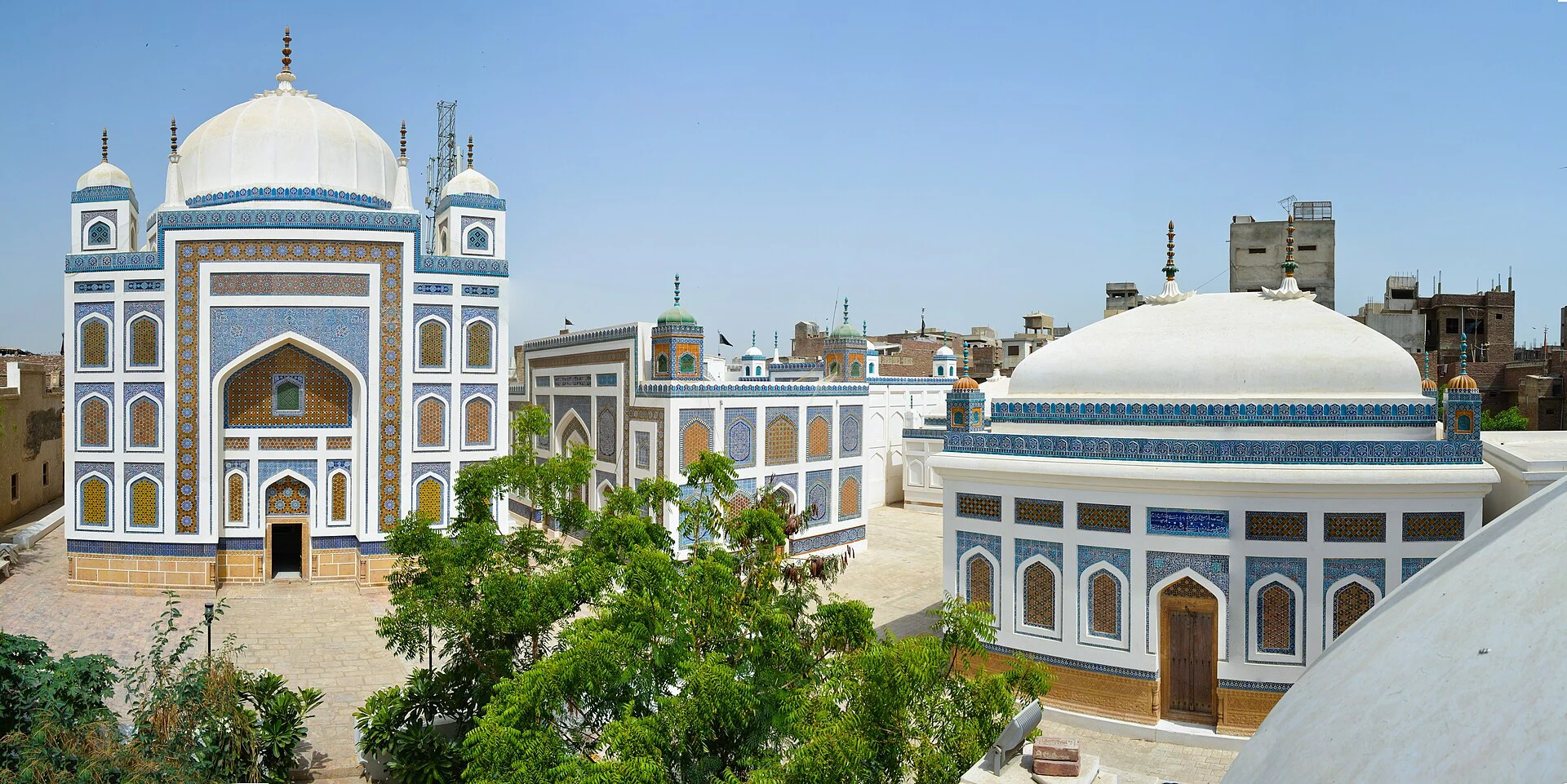
In Hirabad, the tomb complex contains royal burial sites of the Talpur dynasty, which ruled Sindh and other parts of the region from 1784 to 1843. The third landmark is the clock tower at Navalrai Market, also known as Ghanta Ghar. Treating these as separate stops avoids assuming they form an easy circuit or share the same access conditions.
A history shaped by shifts in power and population
Hyderabad was the capital of Sindh for several centuries and retained that provincial role until 1955, when the capital moved to Karachi. The British conquest of 1843 incorporated the city into the Bombay Presidency. After independence and the 1947 partition, some of the Hindu and Sikh population emigrated to India, while Muslim refugees arrived from there. These changes help explain why the city’s heritage is not limited to its buildings: it is also connected to displacement and social transformation.
The guide also notes that violence between Muhajirs and Sindhi nationalist parties damaged the social fabric in the late 1980s. This context calls for a measured account: Hyderabad’s present-day life should not be reduced to episodes of conflict, nor should a complex local history be presented from a single perspective.
Choose the length of your stop and verify transport
The source describes Hyderabad as a railway junction, with train connections to many cities as well as bus and road services. It also gives specific routes, journey times and fares; these details can change, so do not plan around them as though they were current. Before travelling, confirm schedules, fares, availability and safety conditions directly with operators and through current official advice.
As part of a wider trip through Sindh, Hyderabad can serve as a stop between rural and urban settings. The available information does not establish how long to allow for each place, confirm opening hours or guarantee that the fort, tombs and clock tower can all be visited in one day. Check access and conditions at each site before setting out.
Sources and references
Hide references
14 references
References consulted during editorial review. Times, requirements and advisories may change: always confirm with the official source.
-
Hyderabad (Pakistan)Licence: CC BY-SA 4.0 Wikivoyage contributors · Hyderabad (Pakistan)
-
PakistanLicence: CC BY-SA 4.0 Wikivoyage contributors · Pakistan
-
Punjab (Pakistan)Licence: CC BY-SA 4.0 Wikivoyage contributors · Punjab (Pakistan)
-
Khyber PakhtunkhwaLicence: CC BY-SA 4.0 Wikivoyage contributors · Khyber Pakhtunkhwa
-
Afganistán - WikiviajesLicence: CC BY-SA 4.0 Wikivoyage contributors · Afganistán - Wikiviajes
-
Pakistán - WikiviajesLicence: CC BY-SA 4.0 Wikivoyage contributors · Pakistán - Wikiviajes
-
Mughal EmpireLicence: CC BY-SA 4.0 Fuente: Wikivoyage
-
IslamabadLicence: Datos geográficos bajo CC BY 4.0; requiere atribución a GeoNames. Fuente: GeoNames
-
IslamabadLicence: Datos geográficos bajo CC BY 4.0; requiere atribución a GeoNames. Fuente: GeoNames
-
PakistanLicence: CC BY-SA 3.0 DBpedia
-
Pakistan Standard TimeLicence: CC BY-SA 3.0 DBpedia
-
Punjab, PakistanLicence: CC BY-SA 3.0 DBpedia