Walking Mexico City’s Ciudad Universitaria from Rectoría to the Stadium
A day across UNAM’s Central Campus, linking modern architecture, muralism and the volcanic landscape that shaped the city’s southern reaches.
A campus that is still a university
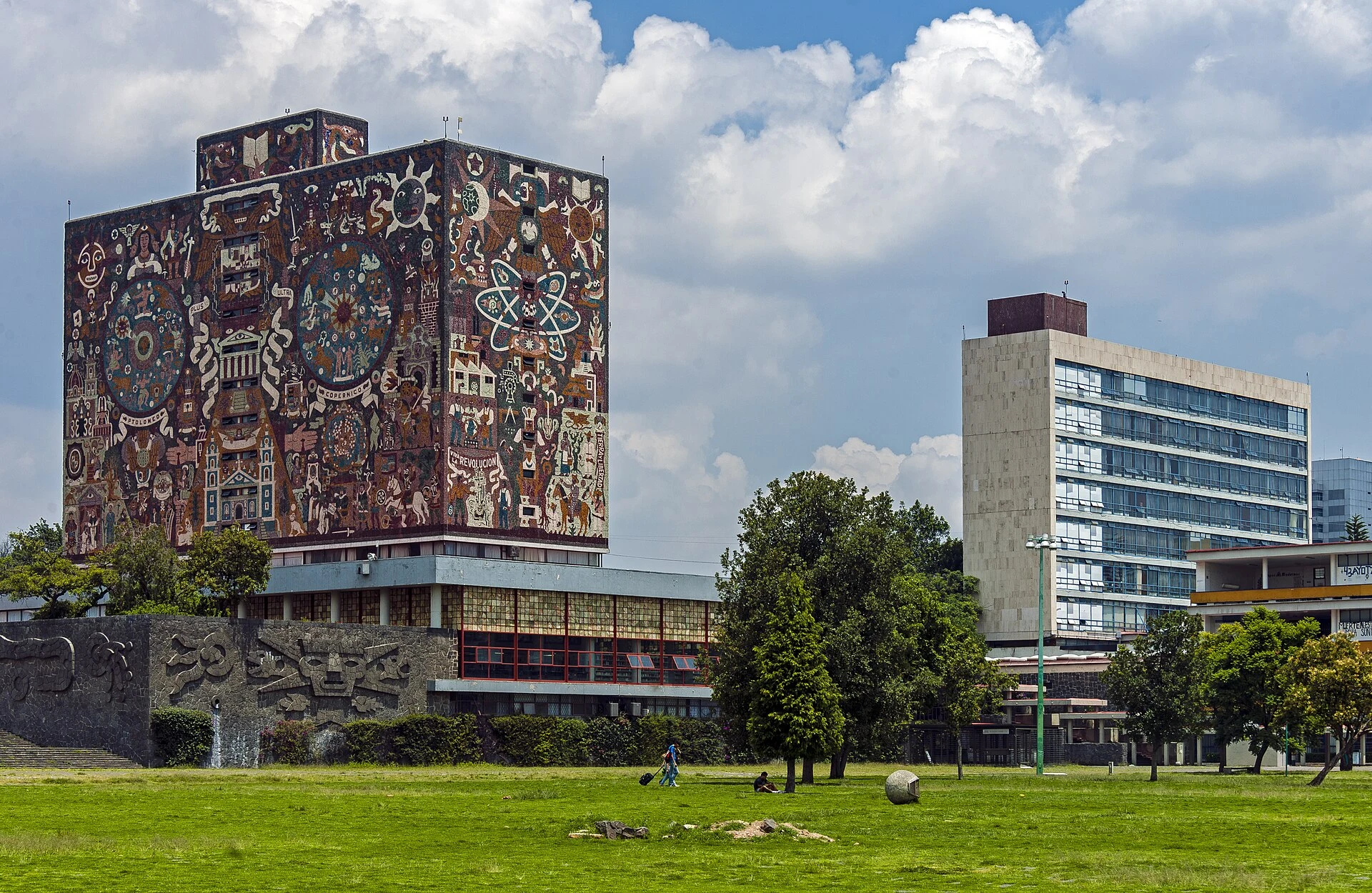
The value of the Central Campus lies in the relationship between its buildings, plazas and uses. Built between 1949 and 1952 by a large team of architects, engineers and artists, the complex was conceived as a work of modern urbanism incorporating references to the pre-Hispanic past and the site’s volcanic foundation.
That is why an attentive visit begins by looking at distances: the plaza in front of Rectoría, the prism-shaped silhouette of the Central Library and the semi-buried volume of the Olympic Stadium do not function as independent monuments. Together, they form a sequence of public and academic spaces. Keep entrances, ramps, corridors and classroom areas clear; visiting without interrupting is part of understanding a heritage site that is still in use.
The essential route from Rectoría to the Stadium
Start at the Rectoría plaza and view David Alfaro Siqueiros’s murals from several angles: the reliefs were designed to be read in motion and from a distance. From there, continue to the Central Library. Juan O’Gorman’s stone mosaic covers all four façades and changes radically depending on which side you see it from; do not try to take it all in at once.
Continue to the Olympic Stadium to view Diego Rivera’s relief on the eastern façade from outside. This part of the route is fairly compact, but it is not a quick one: pause at the transitions between plazas, gardens and buildings. The interest lies as much in the composition of the whole as in the recognizable artworks.
Two possible endings for the same day
If you want to extend the visit into the world of botany, choose the Botanical Garden of the Institute of Biology. Its living collections make it possible to recognize Mexican plants on a campus built over a lava landscape. It is a good extension for anyone who prefers to slow down and move from monumental scale to observing plant species and forms.
If you are more interested in contemporary art, take the internal shuttle to the Cultural Zone and set aside time for MUAC. Its programme changes, so it is best not to build the whole day around a particular exhibition without checking it beforehand. Choosing between the garden and the museum prevents an overpacked schedule: both complement the campus, but they suit different rhythms.
Getting around without a car and pacing the walk
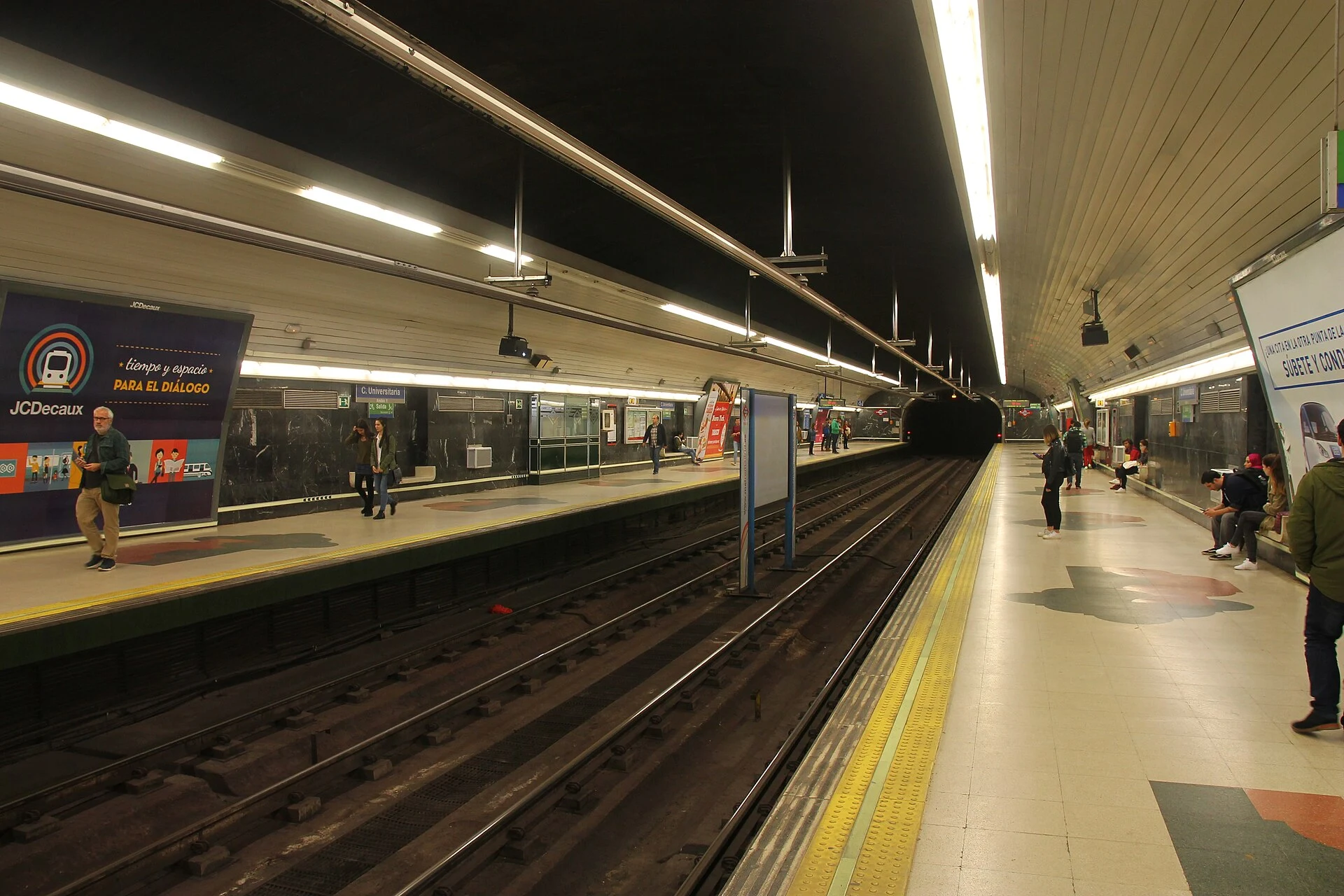
Universidad Metro station and Ciudad Universitaria Metrobús station connect with the internal Pumabús system. This free service is available to visitors and is especially useful for linking public-transport access with the Botanical Garden, the Cultural Zone or the return from areas farther from the Central Campus.
For the Rectoría–Library–Stadium sequence, walking helps you perceive the spatial relationships; for the rest of the campus, combine walking stretches with the bus. Bring water, sun protection and stable footwear: there are broad plazas and exposed routes. Service conditions, active routes and timetables may change during university holidays or special events; check them on the day.
What to avoid so the visit makes sense
Do not treat Ciudad Universitaria as a collection of façades to tick off in an hour. Make fewer stops, listen to your surroundings and pay attention to who uses each space. The murals, libraries, sports courts and green areas belong to a living public institution, with academic and cultural work taking place every day.
It is also worth distinguishing the listed heritage site from the rest of the enormous Ciudad Universitaria. The Central Campus is the core recognized for its historic design; the Botanical Garden and Cultural Zone broaden the experience, but they do not replace reading that original layout. Fewer journeys and more observation generally make for a clearer and more respectful visit.
Official references to check before going
- UNESCO World Heritage Centre: listing and map of UNAM’s Central Campus of Ciudad Universitaria, inscribed in 2007.
- UNAM General Directorate of General Services and Mobility: current Pumabús routes and operations.
- Mexico City Metro system: information for Universidad station on Line 3.
- UNAM Institute of Biology: access to the Botanical Garden from Universidad Metro, Ciudad Universitaria Metrobús and Pumabús.
- Museo Universitario Arte Contemporáneo: current programme, opening hours, prices and access conditions.
Check before setting out transport timetables, venue openings, exhibitions, access arrangements and any changes caused by the university calendar.
Sources and references
Hide references
24 references
References consulted during editorial review. Times, requirements and advisories may change: always confirm with the official source.
-
MexicoLicence: CC BY-SA 3.0 DBpedia
-
Ciudad UniversitariaLicence: Datos geográficos bajo CC BY 4.0; requiere atribución a GeoNames. Fuente: GeoNames
-
Ciudad Universitaria, Mexico City, 04360, MexicoLicence: ODbL 1.0; atribución y obligación de compartir bases derivadas. Fuente: OpenStreetMap